
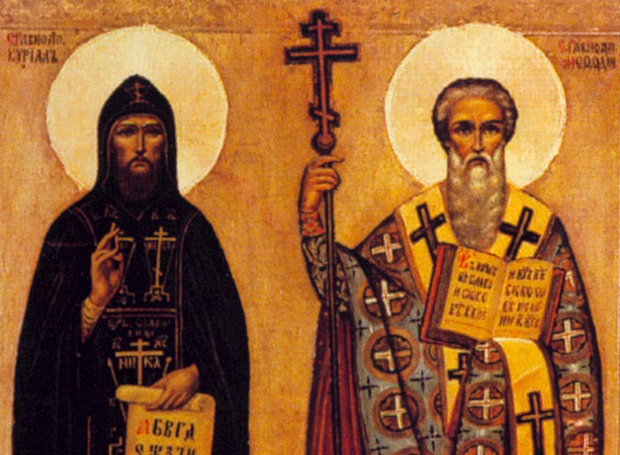
On May 11, the Orthodox Church commemorates Saints Cyril and Methodius, the Thessalonian missionaries known as the Enlighteners of the Slavs. They are regarded as outstanding representatives of the universal and supranational spirit of Orthodoxy. The two brothers distinguished themselves through their exceptional education, linguistic knowledge, ecclesiastical ethos, holiness of life, and missionary zeal.
Saint Cyril (827–869 AD), a Greek theologian and cleric from Thessaloniki, was a disciple of Saint Photios and served as archivist, librarian, secretary of the Patriarchate, and professor of Philosophy in Constantinople. Fluent in the Slavic language, he led missionary efforts among the Slavs and created the Slavic alphabet, contributing decisively to the spiritual and cultural development of the Slavic peoples.
Saint Methodius (825–885 AD), Cyril’s brother, cooperated closely with him in the evangelization of the Slavs in Moravia. Though less scholarly, he was known for his practical abilities and served both as governor and abbot before becoming Archbishop of the Slavs. Despite persecution and imprisonment, he continued translating the Holy Scriptures into Slavonic and strengthened the foundations of Slavic Christian civilization.
The mission of Saints Cyril and Methodius marked a turning point in European history. Through the translation of sacred texts and the introduction of the Slavic language into worship, they opened the path for the Christianization and cultural flourishing of the Slavic world. Their work shaped the religious and cultural identity of large parts of Central, Eastern, and Southeastern Europe.
Unlike Western missionaries of the time, who imposed Latin culture and language, the two Thessalonian saints respected the identity of the Slavic peoples. Inspired by the Orthodox understanding of universality, they created an independent Slavic literary tradition rooted in Byzantine civilization while preserving the uniqueness of each nation.
Their legacy remains timeless, symbolizing unity, peaceful coexistence, respect for diversity, and the universal mission of Christianity beyond nationalism and political divisions.